

Introduction
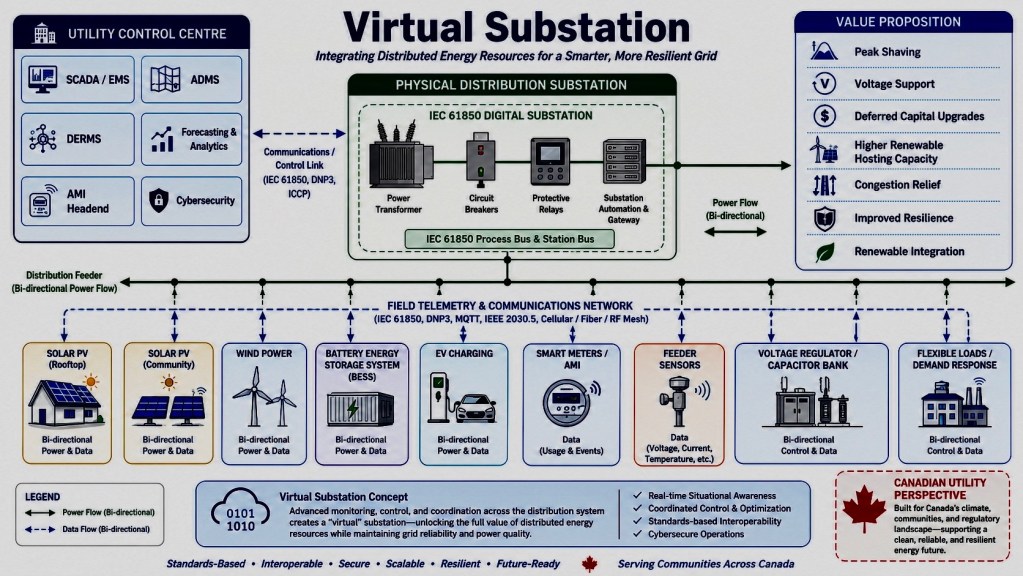
A virtual substation is not a replacement for steel, copper, transformers, breakers, relays and grounding grids. It is a control architecture that allows distributed energy resources, field sensors, intelligent electronic devices, communications networks and analytics platforms to behave as a coordinated electrical asset. In practical utility terms, it extends the operating logic of the substation beyond the fence line. It uses telemetry, protection coordination, DERMS, SCADA, AMI, feeder automation and forecasting to understand what is happening across the feeder and to dispatch local resources with substation discipline.
From a Canadian perspective, this concept is becoming increasingly relevant. Our utilities operate long rural feeders, dense urban networks, winter peaking loads, summer air conditioning peaks, electrification pressure, aging assets and growing customer owned generation. A virtual substation gives the distribution operator a way to manage the edge of the grid as an engineered system rather than as a collection of unmanaged injections and withdrawals.
Value Proposition
The value proposition is operational visibility, controllability and avoided capital. A conventional substation upgrade is expensive, site constrained and slow. A virtual substation can defer some upgrades by managing voltage, loading, reverse power flow, peak demand and local congestion using resources already connected to the distribution grid. It does not eliminate the need for traditional infrastructure, but it can change the timing, scale and priority of investment.
The engineering challenge is not merely software. The utility must know the feeder model, transformer capacity, phase balance, protection settings, voltage limits, communications latency, cybersecurity posture and customer participation rules. Expert bodies such as EPRI, IEEE and NREL consistently frame the future grid as a coordinated system of digital substations, distributed resources and advanced controls. That is the correct lens. A virtual substation is only valuable when its control actions are electrically valid and operationally trusted.
Solar Power
Solar generation is often the first resource that exposes the need for virtual substation thinking. Rooftop and community solar can reduce feeder load at noon, create reverse power flow, raise voltage and then disappear quickly during cloud movement or evening ramp. Smart inverters with Volt VAR and Volt Watt functions can support feeder voltage, but only if settings are coordinated and monitored. In Canada, solar output is seasonal and regionally variable, yet it can still provide meaningful local energy and voltage support when integrated into a controlled operating envelope.

Wind Power
Wind power adds diversity because its production profile is often different from solar. In rural Canadian service territories, wind resources may be connected at distribution or sub transmission levels where feeder strength, fault contribution, voltage regulation and protection coordination matter. A virtual substation can forecast wind output, monitor feeder loading and coordinate switching, reactive support and curtailment when required. The goal is not to maximize wind at all times. The goal is to maximize usable wind within safe electrical limits.

Battery Power
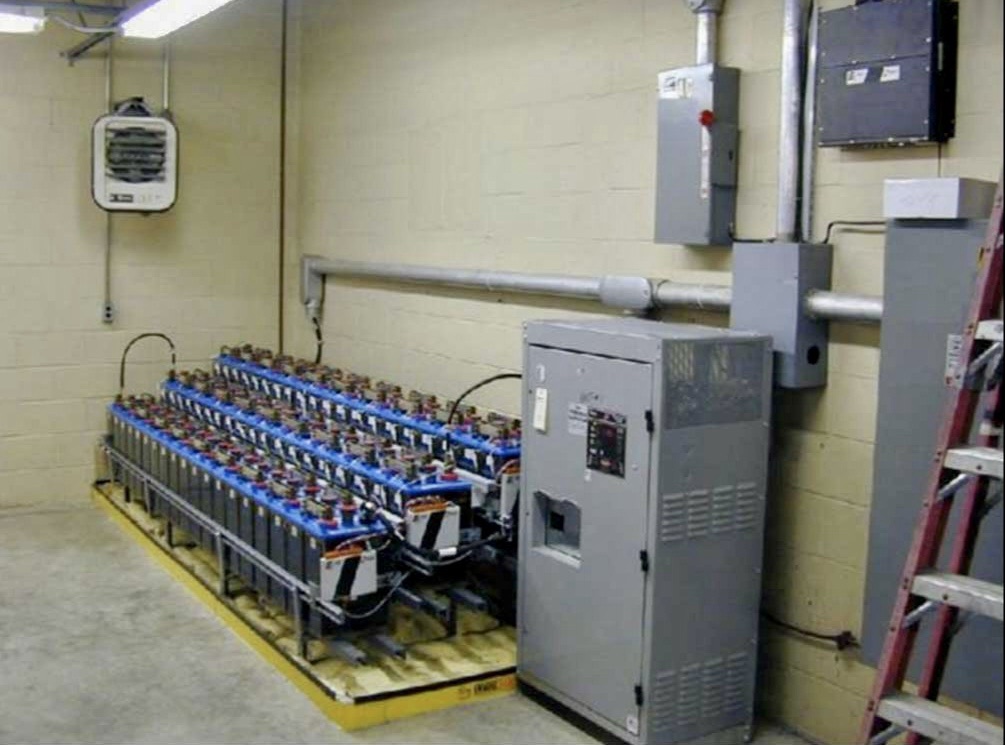
Battery energy storage is the most dispatchable component of the virtual substation. Batteries can absorb excess solar, discharge during peaks, support voltage, provide ramp control and improve resilience for selected loads. From an operator’s perspective, batteries convert intermittent renewable output into a controllable grid service. The key technical parameters are power rating, energy duration, state of charge, inverter capability, response time, location and communications reliability. A battery at the right feeder location can be worth more than a larger battery at the wrong node.
Renewable Energy
Renewable energy integration is ultimately a control problem. The Canadian grid will need more clean electricity, but renewable penetration must be supported by visibility, forecasting, protection engineering and market rules that value flexibility. A virtual substation provides a practical bridge between traditional utility operations and a more distributed grid. It allows solar, wind, batteries, demand response and electric vehicles to be treated as coordinated feeder resources rather than random disturbances.
Summary
The virtual substation is an engineer’s response to a changing distribution system. It preserves the discipline of the physical substation while extending intelligence into the feeder, the customer premise and the distributed resource fleet. For Canadian utilities, the opportunity is significant: better asset utilization, higher renewable hosting capacity, improved reliability, reduced peak stress and more defensible capital planning. The limitation is equally clear. A virtual substation must be engineered, tested, secured and operated with the same seriousness as any physical substation. When that standard is met, it becomes one of the most important building blocks of the modern smart grid.